
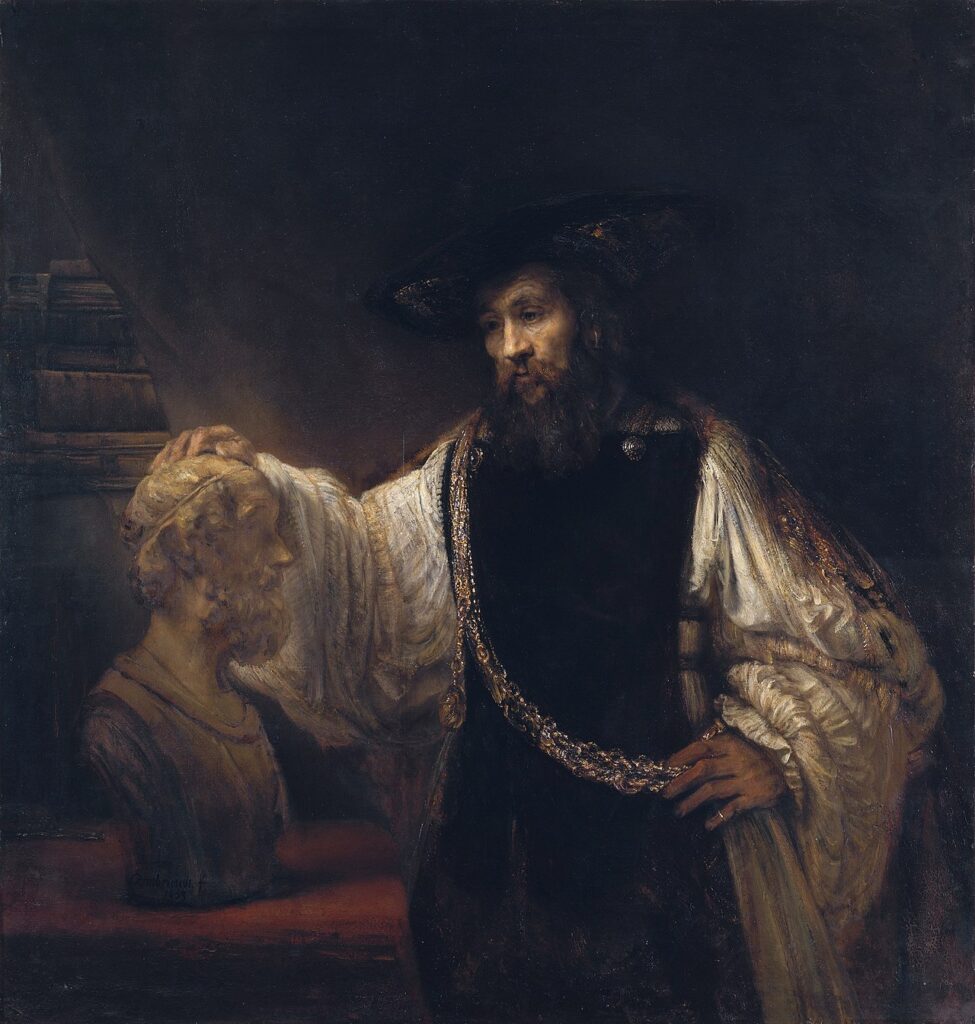
Political Animals: The Politics of Aristotle
Aristotle’s Politics is one of the foundational texts of Western political thought, but it is also one of the strangest: a work that moves fluidly between empirical observation, normative theory, household management, constitutional analysis, and reflections on human nature. This seminar offers a slow, careful reading of the Politics in its entirety as an inquiry into rule, citizenship, law, and the conditions of political flourishing.
We will examine Aristotle’s account of the polis, or city-state, as a “natural” association, his claim that human beings are political animals, and his insistence that politics is inseparable from ethics. Along the way, we will engage his analysis of households and property, citizenship and exclusion, constitutional forms, political education, and the causes of stability and corruption within regimes, as well as his notorious defense of slavery and patriarchy. Special attention will be paid to Aristotle’s typology of constitutions and his treatment of democracy and oligarchy, not as abstract ideals but as historically situated and internally unstable forms of rule.
Rather than approaching the Politics as a unified doctrine, the seminar treats it as a text full of tensions and unresolved questions: between nature and convention, hierarchy and equality, virtue and necessity, rule by the best and rule by the many. We will also assess Aristotle’s distinctive method (his reliance on comparative analysis, historical examples, and practical judgment) and how it shapes the kinds of political conclusions he is willing, and unwilling, to draw.
While we will occasionally gesture toward later thinkers influenced by Aristotle, the primary aim is to understand the Politics on its own terms and to test its arguments against enduring questions of political life.
We believe cost should not be a barrier to participation. Two sliding scale seats are available in all BFI seminars — contact us to inquire.
Dates to be announced. Registration will open soon.