
Socialism Before Marx
Before socialism became virtually synonymous with Karl Marx, it named a broad and unsettled field of moral critique, religious dissent, revolutionary politics, and utopian experimentation. This seminar examines those earlier socialist traditions not as naïve or merely “utopian” precursors, but as serious attempts to respond to the social dislocations produced by early industrial capitalism.
Alongside the writings of figures such as Henri de Saint-Simon, Charles Fourier, Robert Owen, Wilhelm Weitling, Étienne Cabet, and Moses Hess, we will consider The Communist Manifesto both as a revolt against and a product of these earlier intellectual currents. Particular attention will be paid to Marx and Engels’s attack on “utopian socialism” and what those polemics reveal about the political stakes of socialist debate in the 1840s.
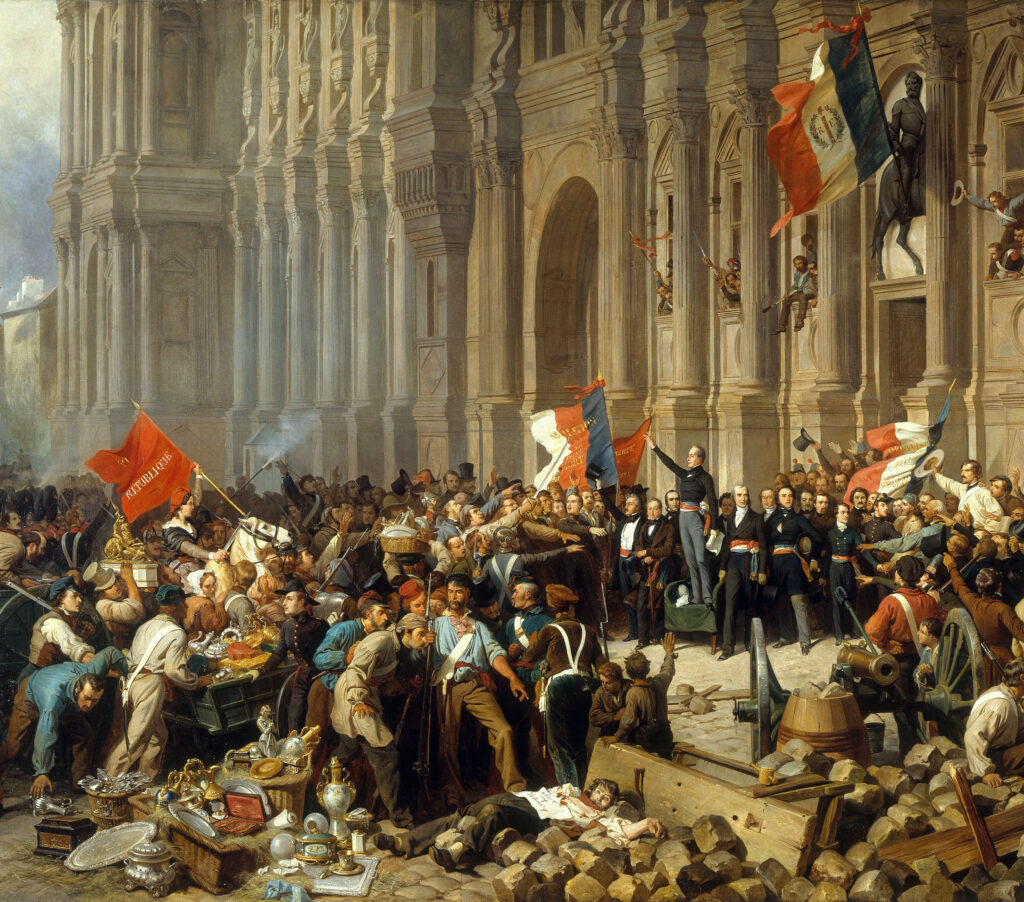
Rather than presenting Marxism as the inevitable outcome of earlier socialist thought, the seminar treats this history as the product of political contestation and historical circumstance. We will situate these arguments within the volatile social, intellectual, and organizational currents of the mid-nineteenth century on the eve of the 1848 revolutions, when socialism was still an open question rather than a widely recognized doctrine. The seminar asks what problems early socialists were trying to solve, why some projects failed or were displaced, and what may have been lost when socialism narrowed around a single dominant tradition. Marx’s intervention will be approached as one powerful and consequential position within a crowded field.
We believe cost should not be a barrier to participation. Two sliding scale seats are available in all BFI seminars — contact us to inquire.
Dates to be announced. Registration will open soon.